

Sussex Architecture
Downland, Weald and coast.
Sussex holds three very different landscapes within a short drive, and each asks for a different kind of house.
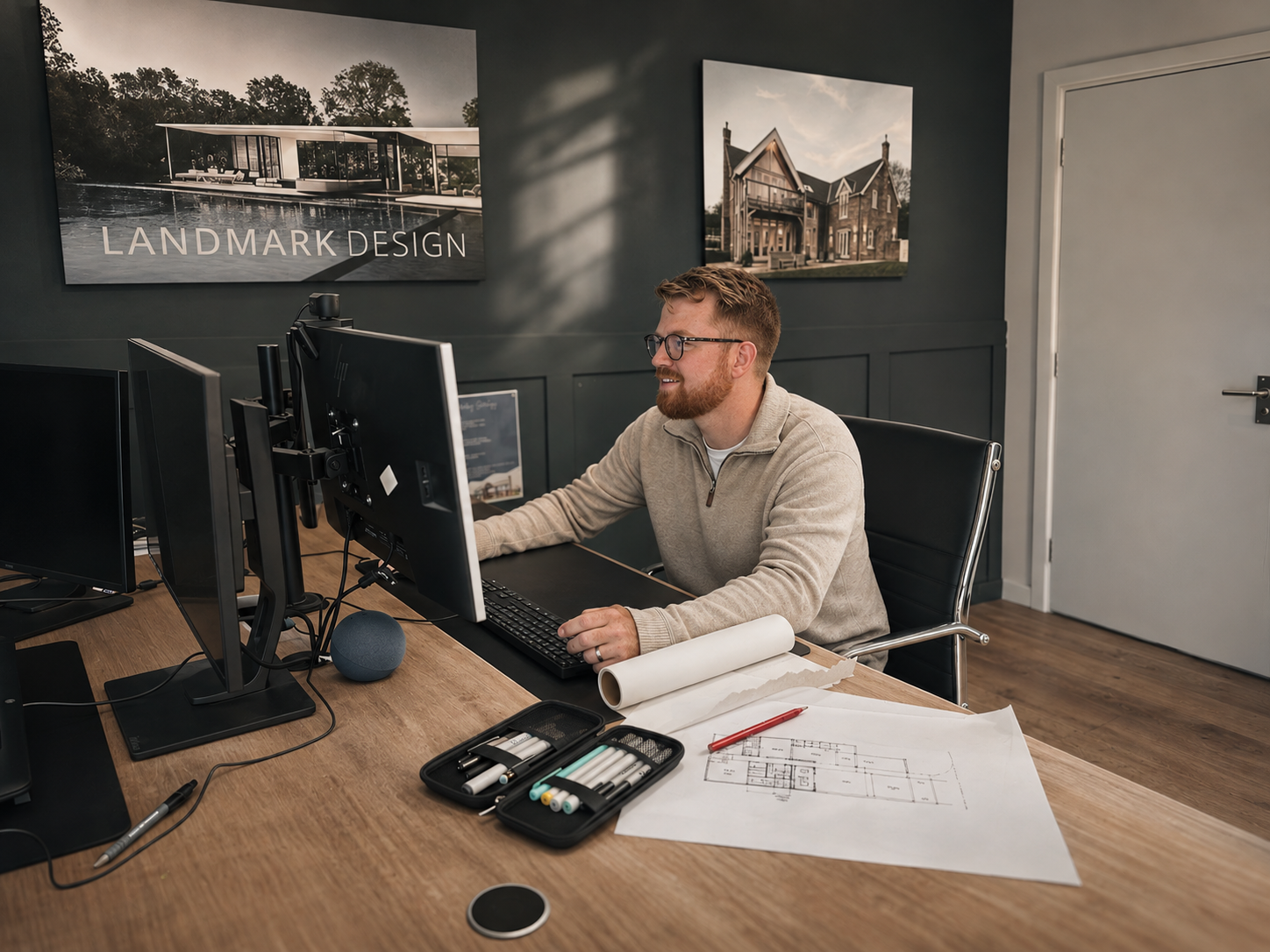
Our story.
Who are we?
On the Downs the concern is the long view: buildings kept low, roofs simple, materials drawn from chalk, flint, brick and clay tile. In the Weald it is the woodland edge and the small fields, where timber cladding and tile sit naturally and a house can open almost entirely to its garden without shouting.
Much of our Sussex work is on existing buildings — farmhouses, barns, oast-adjacent outbuildings and post-war houses that have never quite worked — where the design job is to find the plan the building always wanted while leaving its character intact. Where a new house is proposed, we argue the case on its relationship to the settlement edge and the landscape rather than on floor area.
With more than 450 projects behind us, we design new homes, extensions, luxury developments and complex renovations across Sussex, Hampshire and the wider South of England, always in close collaboration with you.

What we do.
From appraisal to completion.
We begin with a proper appraisal of the site — access, levels, trees, drainage, services and planning history — so you know early what the land can carry.
We handle the planning process, including conservation area and listed building consent where it applies, and prepare the drawings, statements and specialist input a sensitive site needs.
From there we take the design through building regulations and technical detailing, and stay close to the build so the finished house matches the drawings.
Selected Projects


Our experience in Sussex.
One studio.
One studio in Hampshire covering Sussex, with local engineers and contractors who know the Weald’s clay and the chalk of the Downs.
10+ years.
Over a decade of work on rural and downland buildings, including conversions of agricultural structures and extensions to listed farmhouses.
450+ projects.
More than 450 projects across the South of England, from new houses on the edge of villages to the patient reworking of buildings that had been altered badly over time.